History · 1876 to now
Garibaldi Station, seventeen mills, and a beautiful mountain that isn't there.
Belmont's street grid, housing stock, and civic self-image were all set by three forces: the railroad, the Benedictines, and cotton.
The short version
A town named twice, built once, and rebuilt on its own bones.
The settlement began as a stop on the Atlanta & Charlotte Air Line Railway called Garibaldi Station, after an engineer on the line. In 1876 Benedictine monks from Pennsylvania established a monastery on farmland nearby — the institution that became Belmont Abbey. At the abbot's request the post office was renamed Belmont in 1886, from the Latin bellus mons, beautiful mountain. The town incorporated in 1895.
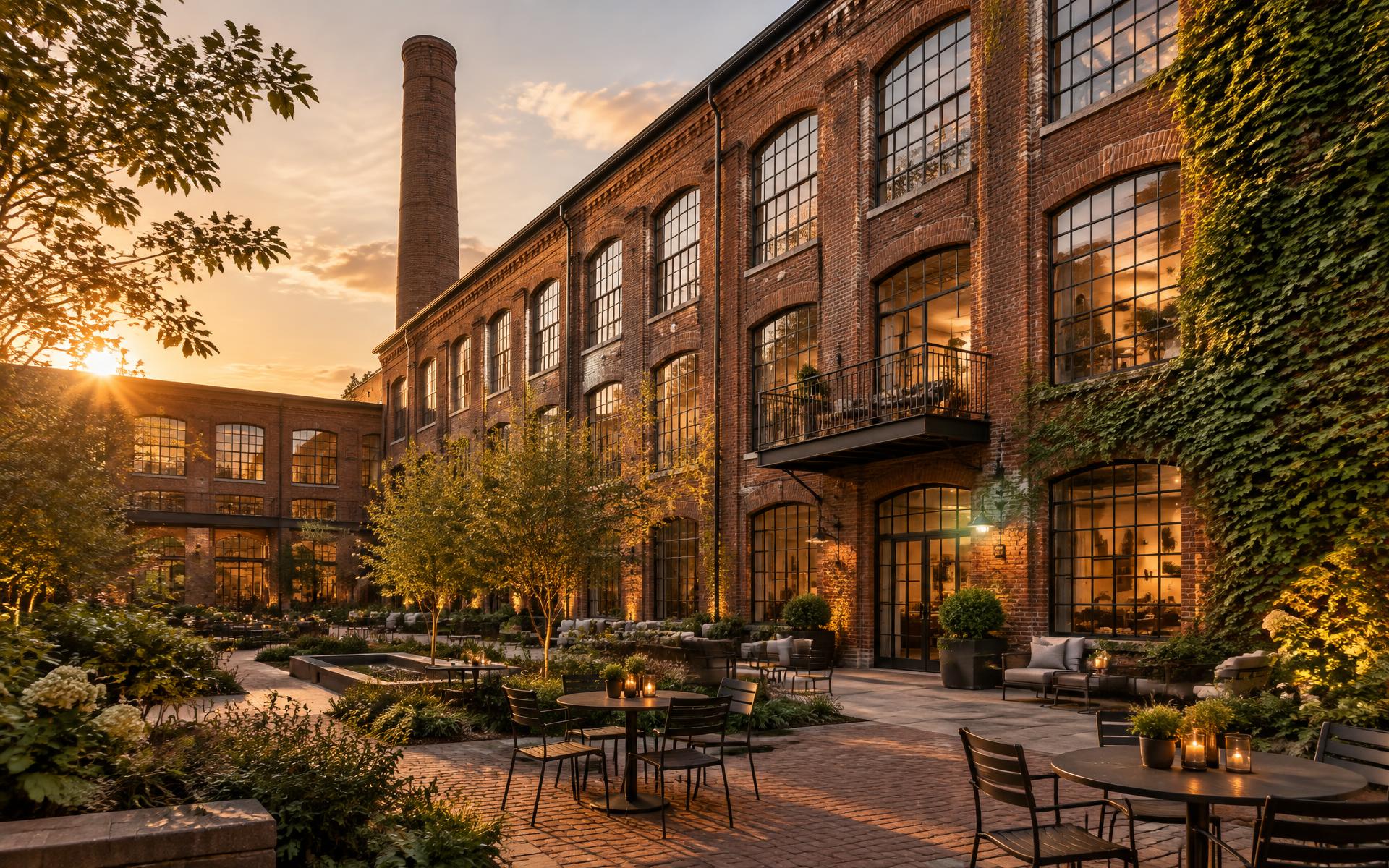
Then came cotton. The Stowe and Lineberger families, working with neighbors and in-laws, chartered mill after mill along the rail line and the rivers until Belmont counted more than a dozen — the town eventually advertised itself as the City of Diversified Textiles. Chronicle Mill, chartered in 1901 by Robert Lee Stowe with A.C. Lineberger and S.P. Stowe, was the first inside town limits, and later housed one of the earliest industrial air-conditioning installations in the United States.
Mill villages were built around each plant: small houses on small lots, a store, a church, a ballfield. That pattern is still legible in the map today, and it is why Belmont has walkable older neighborhoods when most Piedmont suburbs of its size do not. When the industry left in the late twentieth century, the buildings stayed — and the second act became adaptive reuse rather than demolition.
01
A timeline of the essential dates
Garibaldi Station
1870s
A railroad stop on the Atlanta & Charlotte Air Line, named for a line engineer, forms the nucleus of the settlement.
Benedictines arrive
1876
Monks establish Maryhelp Abbey on donated farmland — the beginning of Belmont Abbey and its college.
Renamed Belmont
1886
At the abbot's request the post office becomes Belmont, from bellus mons. The college is chartered the same year.
Incorporation
1895
Belmont is chartered as a town and begins building municipal infrastructure.
Chronicle Mill
1901
Robert Lee Stowe, A.C. Lineberger, and S.P. Stowe charter the first cotton mill within the town proper.
The Basilica
1892 / 1998
The abbey church is completed in 1892 and designated a minor basilica — Mary Help of Christians — in 1998.
Wylie Dam & the lake
1904 onward
Duke's development of the Catawba creates Lake Wylie, eventually defining Belmont's southern shoreline and its premium real estate.
Textiles decline
1970s–1990s
Mills close or consolidate; downtown storefronts empty and the town's population growth stalls.
Botanical garden opens
1999
Daniel J. Stowe's 1991 land gift opens to the public as a botanical garden; it was rebranded the Daniel Stowe Conservancy in 2025.
Mill-to-loft revival
2000s–present
Chronicle Mill and neighboring buildings convert to residential and commercial use; Main Street fills, and Belmont becomes a Charlotte-market destination.
02
The families whose names you'll keep seeing
Belmont's history is unusually personal. A handful of families built the mills, named the streets, funded the churches, and ultimately gave away the land that is now the town's best public amenity.
The Stowes
Robert Lee Stowe and his descendants built and ran mills for a century. Stowe Park downtown carries the name; so does the Conservancy, gifted by Daniel J. Stowe from his family's farmland in 1991.
The Linebergers
Partners and in-laws across multiple mill charters, including Chronicle. The family name attaches to churches, streets, and civic institutions throughout Gaston County.
The Benedictines
The monastic community that renamed the town, founded Belmont Abbey College in 1886, and still maintains the abbey and basilica on campus.
Holy Angels
Founded by the Sisters of Mercy in 1955 to care for children with severe disabilities; now a nationally recognized nonprofit whose downtown businesses employ adults with differing abilities.
03
Why the history matters when you're buying
This is not trivia. Belmont's mill era produced the specific housing inventory that now defines its entry-level market: compact early-1900s cottages on small lots, built quickly and cheaply for mill workers, many since renovated once or twice. Charm, walkability, and original character come bundled with knob-and-tube wiring, undersized services, crawlspaces, and additions built before permits were routine.
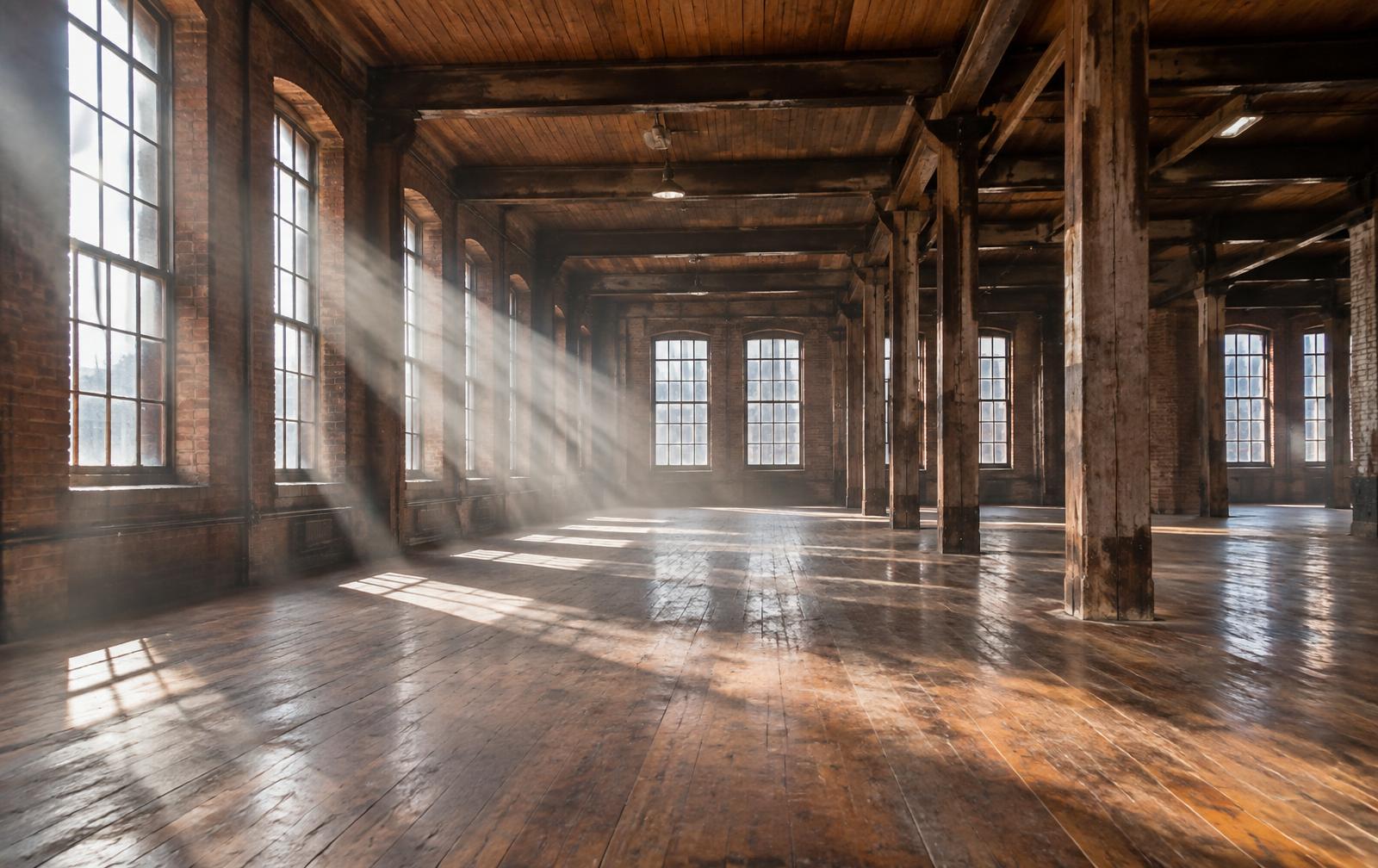
The mill buildings themselves now sell as lofts, which means condo or HOA documentation, shared building systems, and a different insurance conversation than a detached house. And the postwar and 1990s subdivisions filled the gaps between mill villages, which is why a ten-minute drive across Belmont crosses four distinct construction eras.
Practically: in the older blocks, order the inspection before you fall in love, ask what has been updated and when, and price renovation as a certainty rather than an option. The renovation and home-values pages go deeper on both.
Questions & Answers
Belmont history — quick answers
Direct answers to what readers most often ask about this section of the guide. Each answer cites the primary source it rests on.
All Belmont questions →How old is Belmont NC?
+
European settlement at the point where the South Fork meets the Catawba dates to the 1750s. The railroad stop of Garibaldi Station became Belmont in 1886, and the city incorporated in 1895 with Will Puett as its first mayor.
What was the Chronicle Mill?
+
Chronicle Mill was chartered on March 18, 1901 by Robert Lee Stowe with Abel Caleb Lineberger and Samuel Pinckney Stowe — the first cotton mill in Belmont proper, named for Revolutionary War officer Major William Chronicle. It later housed one of the earliest industrial air-conditioning installations in the United States, and it has since been converted into residential lofts.
Why did Belmont have so many textile mills?
+
River power, rail access, and two families. The Stowes and the Linebergers built and financed mill after mill from the 1850s onward until the town carried the nickname 'City of Diversified Textiles,' with roughly seventeen mills operating at the peak.
Are the old mill buildings still standing?
+
Several are, in varying condition. The most visible outcome is adaptive reuse: Chronicle Mill anchors the district that now carries its name, and the surrounding mill-village housing is a large share of Belmont's in-town housing stock.
Topic Cluster
Belmont Background & Answers
How the town was made, where it sits, and the questions newcomers ask most.
The Belmont Guide — Belmont Background & Answers →Our Sources
How this page was researched
Historical detail is drawn from municipal, institutional, and county historical sources. Dates for mill charters and renamings vary slightly between accounts; where sources conflict we cite the institution's own record.
Read our full citation methodology and editorial standards- 01Local history collections and archives
Gaston County Public Library
Historical record of Belmont, its mills, and the Abbey.
- 02City of Belmont — services, planning, and public records
City of Belmont, North Carolina
Municipal boundaries, utilities, planning, and downtown programs.
- 03Belmont Abbey College — history and campus
Belmont Abbey College
Founding history, the Basilica, and campus information.
- 04Daniel Stowe Botanical Garden — visitor information
Daniel Stowe Botanical Garden
Garden acreage, features, hours, and seasonal programs.
- 05Gaston County government services
Gaston County, North Carolina
County services, inspections, and administrative records.
- 06QuickFacts and American Community Survey — Belmont, NC
U.S. Census Bureau
Population, household, and housing characteristics.
Figures such as pricing, assessments, and school assignment change over time. Always confirm current details directly with the source before making a decision.
Belmont Abbey College & the Basilica
A Benedictine campus from 1876 and the landmark at its center.
Continue →Downtown Belmont & Main Street
The walkable core: Stowe Park, the shops, and the restaurant row.
Continue →Belmont Architecture
Mill houses, Craftsman cottages, Abbey stone, and modern waterfront.
Continue →The Belmont Guide
The full table of contents for everything published here.
Continue →